

About This Journal
About Journal of Soil and Groundwater Environment
The Journal of Soil and Groundwater Environment is the official, peer-reviewed journal of the Korean Society of Soil and Groundwater Environment (KoSSGE). Established in 1996, the journal aims to contribute to social benefit by promoting the efficient development and proper conservation of environmental resources through scholarly publication. The journal also fosters communication among academia, industry, government, and non-governmental organizations involved in addressing soil and groundwater environmental challenges.
-
Review Paper
-
Performance Assessment and Legal–Institutional Issues of Groundwater Dams: A Stream–Aquifer System Perspective
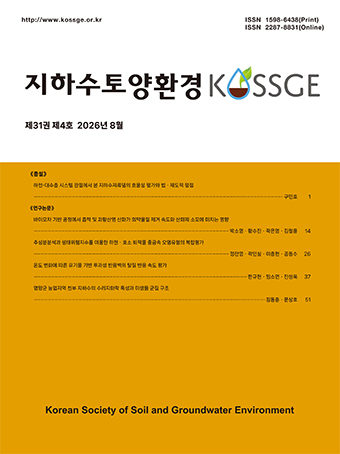
하천-대수층 시스템 관점에서 본 지하수저류댐의 효용성 평가와 법 ∙ 제도적 쟁점
-
Min-Ho Koo
구민호
- In Korea, groundwater dam projects led primarily by K-water have recently entered the construction phase in several water-scarce regions. This review discusses …
- In Korea, groundwater dam projects led primarily by K-water have recently entered the construction phase in several water-scarce regions. This review discusses two major issues related to groundwater dams: performance assessment methods and legal issues concerning groundwater use near streams. First, it examines the limitations of conventional storage-based methods for estimating exploitable water resources and discusses the need for numerical modeling to assess the performance of groundwater dams. Second, it compares Korean legal frameworks for groundwater development near streams with Arizona water law, particularly the subflow doctrine, and discusses the legal issues associated with groundwater dams from a hydrogeologic perspective. The main conclusion of this review is that the performance of groundwater dams should be assessed through analysis of the stream–aquifer system. Ultimately, groundwater dams should be planned and evaluated within an integrated water-resources management framework that treats surface water and groundwater as a single resource. - COLLAPSE
-
Performance Assessment and Legal–Institutional Issues of Groundwater Dams: A Stream–Aquifer System Perspective
-
Research Paper
-
Effects of Adsorption and Persulfate Oxidation on the Kinetics of Pharmaceutical Removal and Oxidant Consumption in Biochar-Based Processes
바이오차 기반 공정에서 흡착 및 과황산염 산화가 의약물질 제거 속도와 산화제 소모에 미치는 영향
-
Soyeong Park, Sujin Hwang, Eunyoung Kwak, Cheolyong Kim
박소영, 황수진, 곽은영, 김철용
- This study investigated the coupled sorption and persulfate-based oxidation behaviors of pharmaceuticals using biochars derived from Sargassum and wooden chopsticks. Carbamazepine (CBZ) …
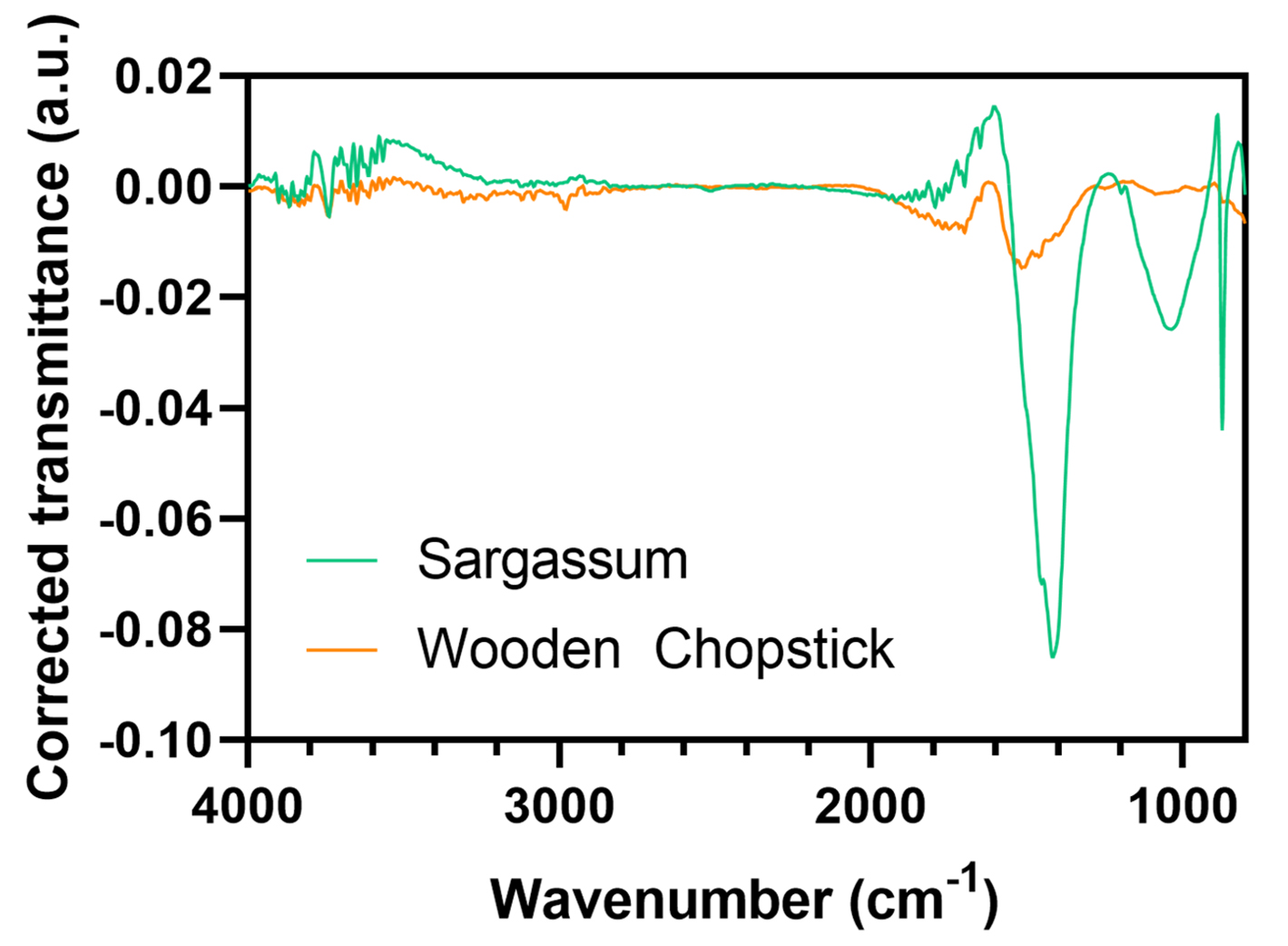
- This study investigated the coupled sorption and persulfate-based oxidation behaviors of pharmaceuticals using biochars derived from Sargassum and wooden chopsticks. Carbamazepine (CBZ) sorption onto Sargassum biochar exhibited typical saturation behavior and was well described by Langmuir and Freundlich models. The rate constant increased with biochar dosage, indicating adsorption-controlled kinetics. In contrast, sulfamethoxazole (SMX) sorption onto wooden chopstick biochar showed concave-upward isotherms and rate constants independent of biochar dosage, suggesting limitations associated with pore accessibility or intraparticle diffusion. In persulfate-assisted systems, pollutant removal followed two-stage kinetics, consisting of rapid initial removal and slower subsequent degradation. The initial stage was mainly governed by sorption, while the later stage was associated with persulfate-driven oxidation. Increasing biochar dosage enhanced both pollutant removal and oxidant consumption, but oxidant utilization efficiency did not increase proportionally. In SMX–PDS systems, rapid initial removal under high oxidant conditions was attributed to simultaneous sorption and oxidation, leading to accelerated surface site turnover. These results demonstrate that pollutant removal is governed by coupled sorption–oxidation processes, with their interaction critically influencing reaction kinetics and oxidant efficiency. - COLLAPSE
-
Effects of Adsorption and Persulfate Oxidation on the Kinetics of Pharmaceutical Removal and Oxidant Consumption in Biochar-Based Processes
-
Research Paper
-
Integrated Assessment of Heavy Metal Contamination Types in River and Lake Sediments Using Principal Component Analysis and Ecological Risk Index
주성분분석과 생태위험지수를 이용한 하천 ∙ 호소 퇴적물 중금속 오염유형의 복합평가
-
Chanyoung Jeong, In-Sil Kwak, Jong-Hyeon Lee, Dongsoo Kong
정찬영, 곽인실, 이종현, 공동수
- This study proposed a PCA-ERI dual assessment framework for comparing multimetal accumulation and potential ecological risk in freshwater sediments. Metal concentrations from …
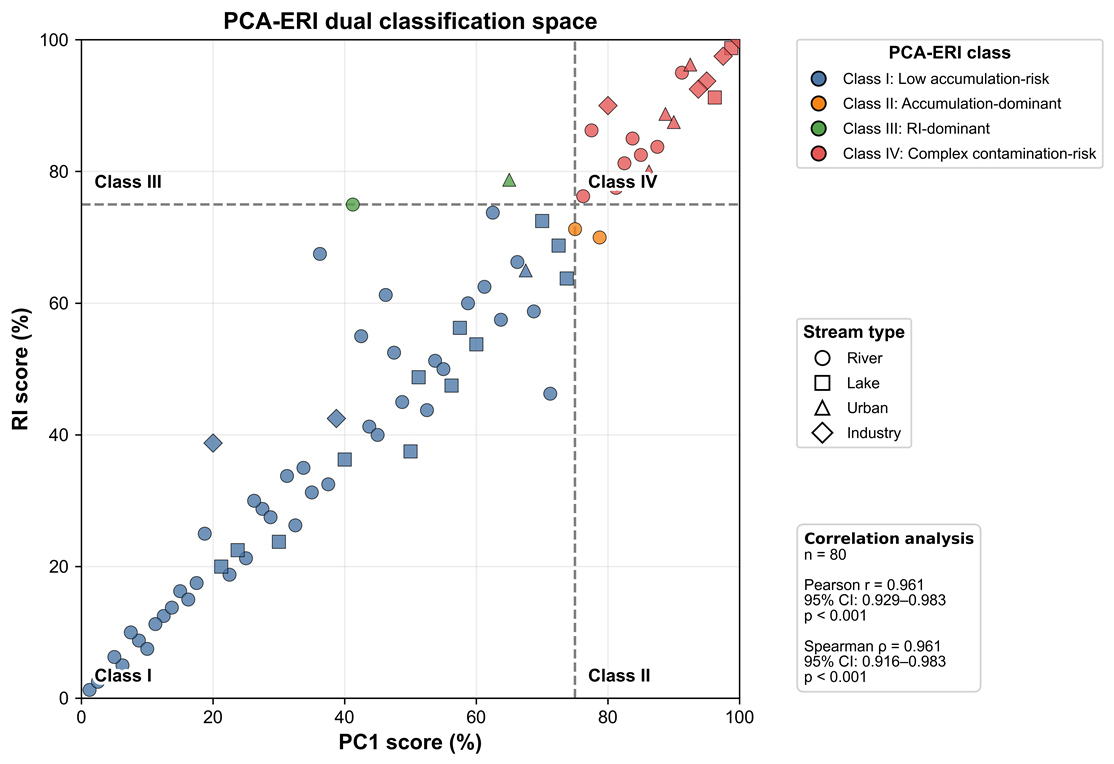
- This study proposed a PCA-ERI dual assessment framework for comparing multimetal accumulation and potential ecological risk in freshwater sediments. Metal concentrations from four surveys were averaged at each of 80 sites across major river systems of South Korea, and site-mean data for eight metals were analyzed. PCA was applied to log-transformed and standardized concentrations, with PC1 representing a multimetal accumulation gradient. The Hakanson ecological risk index was calculated separately and converted to a percentile-based RI score. PC1 and RI scores were strongly correlated, although discordant sites were identified. Using the 75th percentiles of both scores, sites were classified as Low accumulation-risk, Accumulation-dominant, RI-dominant, or Complex contamination-risk. Urban and industrial streams had higher proportions of Complex contamination-risk sites, whereas general streams and lakes were dominated by Low accumulation-risk sites. RI-dominant sites showed relatively elevated As, Cd, and Hg, while Complex contamination-risk sites exhibited broad multimetal enrichment. The framework supports screening and prioritization of sediment contamination. - COLLAPSE
-
Integrated Assessment of Heavy Metal Contamination Types in River and Lake Sediments Using Principal Component Analysis and Ecological Risk Index
-
Research Paper
-
Evaluation of Denitrification Rates in an Organic-Based Permeable Reactive Barrier under Different Temperature Conditions
온도 변화에 따른 유기물 기반 투과성 반응벽의 탈질 반응 속도 평가
-
Gyu Hyun Han, Soyeon Lim, Sung-Wook Jeen
한규현, 임소연, 진성욱
- Nitrate contamination of groundwater poses environmental and public-health risks. An organic-based permeable reactive barrier (PRB) removes nitrate via heterotrophic denitrification, which is …
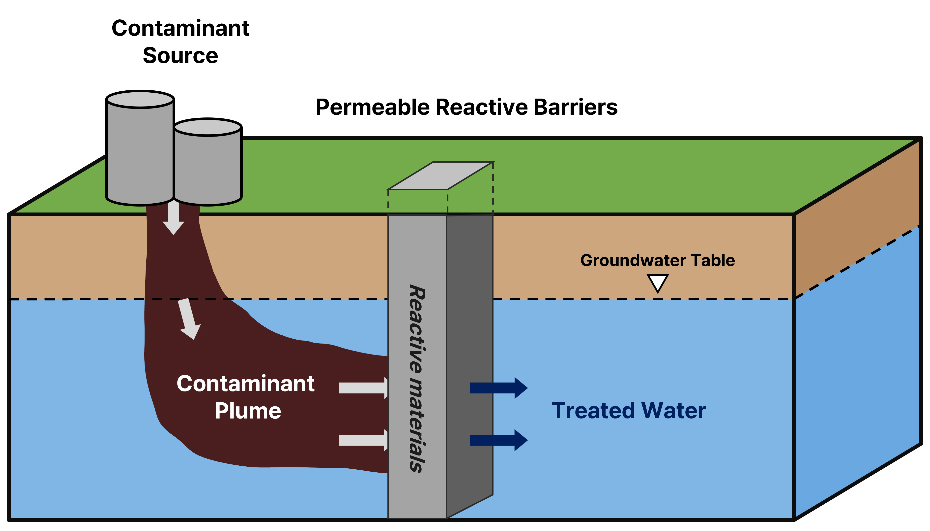
- Nitrate contamination of groundwater poses environmental and public-health risks. An organic-based permeable reactive barrier (PRB) removes nitrate via heterotrophic denitrification, which is strongly influenced by temperature. However, its temperature dependence has not been quantified under controlled conditions with spatially resolved reaction profiles. This study evaluated temperature-dependent denitrification kinetics in a laboratory-scale column packed with pine woodchips to simulate a PRB. Profile samplings were conducted at ambient (24.4°C) and cold (8.8°C), and pH, alkalinity, dissolved oxygen, redox potential, nitrate and nitrite concentrations were measured. Zero-order kinetics, the Q10 index, which is the fold-change in rate per 10°C, and activation energy obtained from the Arrhenius equation were used to quantify the temperature effect. Under both temperature conditions, geochemical indicators confirmed reducing environments suitable for denitrification. Nitrate removal reached 94.6% in the effluent at 24.4°C but declined to 16.5% at 8.8°C, with zero-order rate constants of 0.206 and 0.035 mmol L-1 day-1, respectively, representing a 5.9-fold difference. Calculated from the zero-order rate constants at the two temperatures, the Q10 index (3.12) and activation energy (79.3 kJ mol-1) exceeded values typically reported for woodchip bioreactors, presumably reflecting reduced organic carbon availability and bacterial enzyme activity at low temperatures. These findings provide a quantitative basis for designing organic-based PRBs under seasonally varying temperatures. - COLLAPSE
-
Evaluation of Denitrification Rates in an Organic-Based Permeable Reactive Barrier under Different Temperature Conditions
-
Research Paper
-
Hydrogeochemical Characteristics and Microbial Community Structure of Shallow Groundwater in Agricultural Areas of Yeongyang-gun, Korea
영양군 농업지역 천부 지하수의 수리지화학 특성과 미생물 군집 구조
-
Dong-Hun Kim, Sang-Ho Moon
김동훈, 문상호
- Groundwater is a vital water resource in agricultural regions, yet it is highly vulnerable to anthropogenic contamination. In this study, the hydrogeochemical …
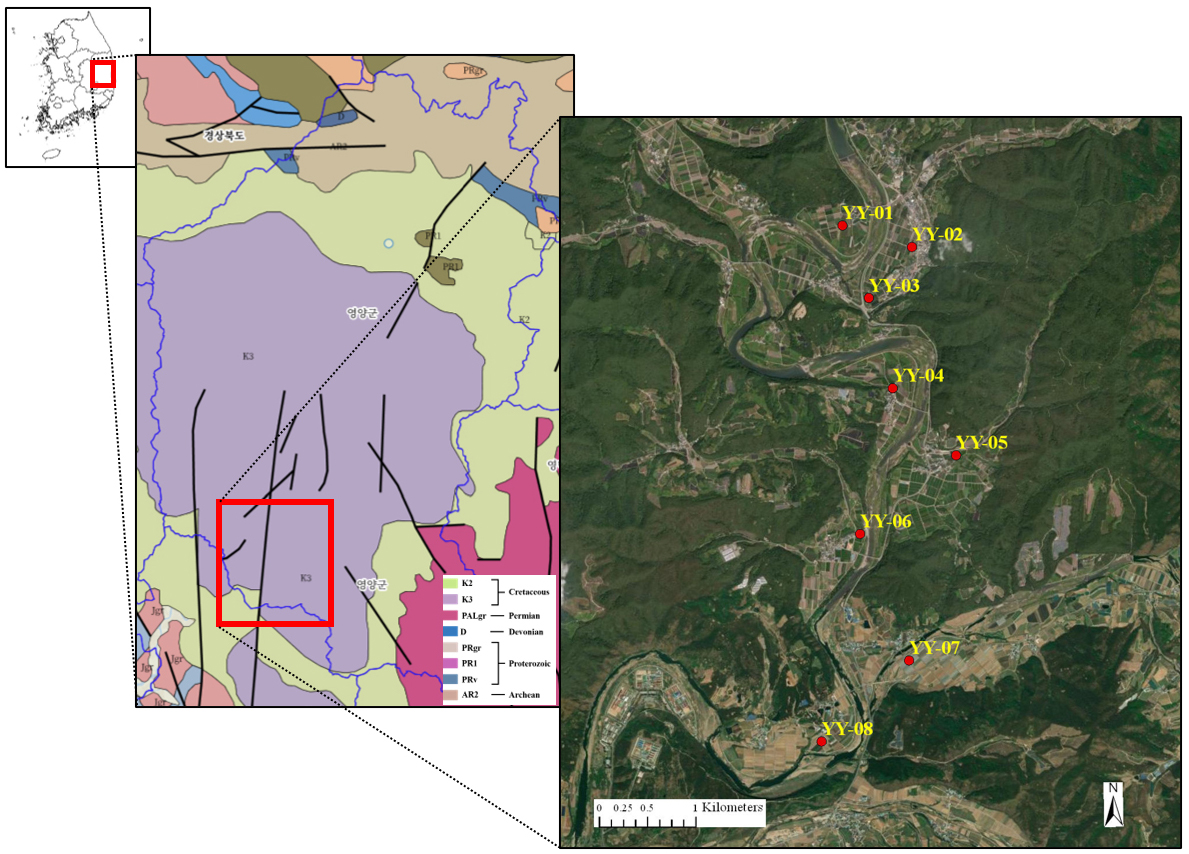
- Groundwater is a vital water resource in agricultural regions, yet it is highly vulnerable to anthropogenic contamination. In this study, the hydrogeochemical characteristics and microbial community structures of shallow groundwater were investigated in eight wells (YY-01 to YY-08) in agricultural areas along the Banbyeoncheon Stream in southwestern Yeongyang-gun, Korea, where elevated nitrate (NO3–) and sulfate (SO42–) concentrations had previously been reported. Groundwater was broadly divided into low-mineralized Ca-HCO3-type water and sulfate-enriched, highly mineralized water comprising Na-SO4, Na-Ca-SO4, and Ca-Na-SO4 facies, the latter reflecting the combined influence of water–rock interaction and agricultural inputs. Based on the Wilcox classification, three samples (YY-02, YY-05, and YY-08) were rated unsuitable for irrigation owing to high salinity. Proteobacteria dominated all samples (mean 52.1%, range 45.6–60.1%), and Gallionella accounted for 13.9% of the community in YY-02, which had the highest Fe concentration (2.68 mg/L) and the lowest DO (1.7 mg/L) and ORP (53.1 mV). NMDS ordination revealed a hydrogeochemical gradient primarily associated with TDS, EC, and SO4 as major drivers of community differentiation. PICRUSt2-based functional prediction indicated that denitrification-related genes (nirK, nirS, nosZ) were enriched in YY-02 and YY-06, sulfate reduction genes (dsrAB, aprAB) were elevated in high-SO4 wells (YY-02, YY-06), sulfur oxidation genes (soxABCX) were predominant in YY-05, and iron oxidation-related genes (cyc2/mtoA) were highest in YY-02, consistent with the Gallionella dominance and elevated Fe concentrations. These results suggest that groundwater microbial community structure and predicted functional potentials are partly associated with hydrogeochemical gradients and may provide useful bioindicators for assessing contamination and natural attenuation potential in agricultural aquifers. - COLLAPSE
-
Hydrogeochemical Characteristics and Microbial Community Structure of Shallow Groundwater in Agricultural Areas of Yeongyang-gun, Korea

 Journal of Soil and Groundwater Environment